

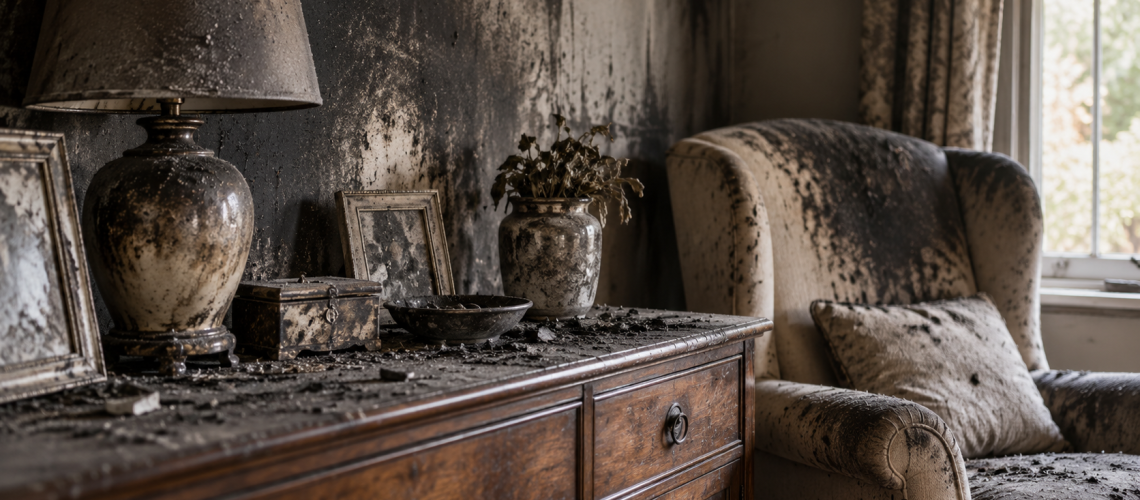
After a fire, soot can look like little more than a layer of black dust. In reality, it can be one of the most damaging contaminants left behind. Soot is made up of very fine particles produced during incomplete combustion, and those particles can settle into furniture, upholstery, artwork and other household contents surprisingly quickly.
The longer soot remains untreated, the greater the risk of permanent staining, corrosion, odour and surface damage. That is why early professional intervention is so important after a fire.
At The Abbey Group, we regularly restore furniture and contents affected by fire and smoke damage. Many items can be recovered successfully, but timing often has a major impact on the final result.
What Does Soot Do to Furniture
Soot is not simply surface dirt. Depending on what has burned, it can contain oily residues, acids and other contaminants that react with the materials they land on.
On wooden furniture, soot can become embedded in polished finishes and open grain. On upholstery, particles can work their way into fibres and padding. On metal fittings, acidic residues can accelerate tarnishing or corrosion.
What initially appears to be a cosmetic problem can therefore become a much more serious restoration issue if it is ignored.
Why Soot Becomes Harder to Remove
Fresh soot is usually easier to remove than soot that has been allowed to remain for days or weeks.
Over time, particles settle more deeply into porous materials and may bond with surfaces. Heat and humidity can make this worse, particularly in a property that has remained closed following a fire.
This can result in:
- Permanent discolouration
- Staining of wood and fabrics
- Damage to polished finishes
- Corrosion of metal components
- Persistent smoke odours
- Increased restoration costs
The longer contamination is left untreated, the more specialist work may be required.
Soot Can Damage Different Materials in Different Ways
One of the challenges with fire restoration is that soot does not affect every material in the same way.
Wooden furniture
Soot can settle into grain, joints and decorative details. If inappropriate cleaning products are used, the finish can be smeared or damaged further.
Upholstery and fabrics
Smoke particles can penetrate deeply into fabrics and cushioning. Surface cleaning alone may not remove contamination or odours.
Metal fittings
Brass, steel and other metals can react with acidic residues, potentially leading to tarnishing and corrosion.
Artwork and decorative items
Paintings, frames and delicate decorative finishes can be particularly sensitive. Aggressive cleaning can cause irreversible damage.
Why DIY Cleaning Can Make Things Worse
It is understandable to want to start cleaning immediately after a fire, but household cleaning products are rarely designed for soot removal.
Rubbing soot with a wet cloth can push particles deeper into wood or fabrics. General-purpose sprays may react with finishes, while vacuuming with the wrong equipment can spread fine particles around the property.
For valuable, antique or sentimental items, it is usually safer to leave cleaning to an experienced restoration specialist.
Smoke Odours Can Become Embedded
Soot and smoke odours are closely connected. Even after visible marks have been removed, microscopic contamination may remain within wood, fabrics or internal furniture structures.
Professional restoration may involve specialist deodorisation and cleaning methods designed to deal with the source of the odour rather than simply masking it.
Early treatment can make this process considerably easier.
Does Insurance Cover Soot Damage
Fire and smoke damage is commonly included within buildings and contents insurance policies, although cover depends on the individual policy.
Following a fire, it is important to photograph affected items and avoid disposing of anything before your insurer or restoration specialist has assessed it.
Professional documentation can help determine which items can be restored and which may need replacement.
Can Soot-Damaged Furniture Be Restored
In many cases, yes. Furniture that looks badly affected may still have a sound underlying structure.
Professional restoration can include:
- Specialist soot removal
- Controlled cleaning
- Odour treatment
- Repair of damaged finishes
- French polishing and refinishing
- Upholstery restoration
- Repair of damaged joints or fittings
The sooner the furniture is assessed, the greater the chance of preventing permanent deterioration.
Why Fast Action Matters
Soot damage is progressive. It does not necessarily stop once the fire has been extinguished.
Residues continue interacting with surfaces, while odours and contamination can penetrate further into materials. Early assessment allows affected contents to be stabilised and the correct treatment to begin before the damage becomes more difficult to reverse.
Professional Fire and Soot Damage Restoration
At The Abbey Group, we specialise in restoring furniture and household contents affected by fire, smoke and soot damage. Our experienced team carefully assesses each item and selects the most appropriate restoration method according to its material, condition and value.
Whether the affected item is antique furniture, an upholstered chair, a family heirloom or another treasured possession, professional restoration can often save items that initially appear beyond repair.
If your furniture or contents have been affected by soot or smoke damage, contact The Abbey Group on 01708 741135 or email info@abbey-group.net for professional advice and restoration support.