

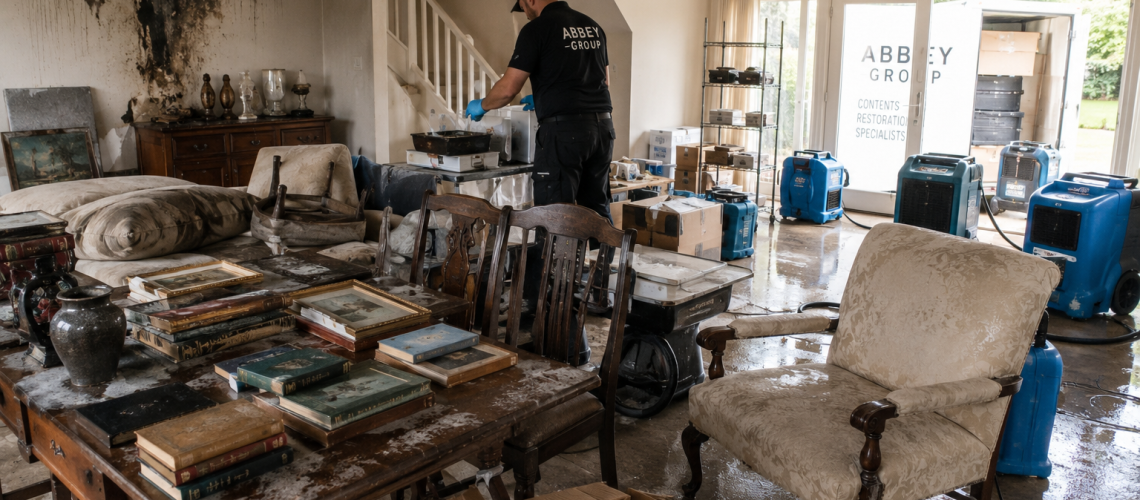
When fire, flooding, leaks or accidental damage affect a property, the immediate concern is often the safety of the building itself. However, the contents inside can also suffer severe damage from water, smoke, soot, debris and contamination. Furniture, artwork, personal belongings and sentimental items may appear beyond repair, but in many cases professional emergency contents restoration can successfully recover them.
At The Abbey Group, we provide emergency contents restoration services across the UK, helping homeowners, businesses and insurers recover damaged belongings quickly and professionally. Understanding the restoration process can help reduce stress and ensure the best possible outcome after a disaster.
Step 1 – Emergency Contact and Initial Response
The process begins with an emergency callout or enquiry. This may come directly from a homeowner, business owner, insurer or loss adjuster following an incident such as:
- Fire or smoke damage
- Flooding or burst pipes
- Ceiling collapse or water leaks
- Storm or accidental damage
Fast response is critical. The longer damaged contents remain exposed to moisture or contamination, the greater the risk of permanent deterioration.
Step 2 – Damage Assessment and Documentation
Once onsite, restoration specialists carry out a detailed assessment of the affected contents. Every item is inspected to determine the extent of the damage and whether restoration is possible.
At The Abbey Group, this stage includes:
- Identifying water, smoke or soot contamination
- Assessing structural damage to furniture and contents
- Moisture testing where required
- Photographing and documenting damaged items
- Preparing reports for insurance purposes
This documentation helps support insurance claims while providing a clear restoration plan.
Step 3 – Stabilisation to Prevent Further Damage
Before restoration can begin, contents often need to be stabilised. This is one of the most important stages of the emergency process.
Water-damaged furniture may require controlled drying to prevent warping or cracking. Smoke-damaged items may need isolation to stop contamination spreading further. Delicate materials such as artwork, books and textiles require careful environmental control to prevent permanent deterioration.
The Abbey Group uses specialist drying, deodorisation and contamination control methods designed to preserve as much of the original item as possible.
Step 4 – Specialist Cleaning and Decontamination
Once contents are stabilised, professional cleaning and restoration begin. Different materials require different treatment methods.
This may include:
- Soot and smoke residue removal
- Deep cleaning of upholstery and fabrics
- Odour neutralisation
- Surface refinishing and polishing
- Drying and restoring water-damaged furniture
- Cleaning artwork, books and decorative items
Specialist techniques allow many items that initially appear beyond repair to be successfully recovered.
Step 5 – Restoration and Repairs
Following cleaning, damaged items are repaired and restored where necessary. This may involve structural repairs, refinishing wooden surfaces, restoring upholstery or conserving delicate materials.
At The Abbey Group, our craftsmen combine traditional restoration skills with modern recovery techniques to restore both modern and antique contents.
Step 6 – Final Inspection and Return
Before contents are returned, every item undergoes a final inspection to ensure restoration standards have been met. Items are then carefully packed and safely returned to the property or alternative location.
The goal is always to restore belongings to the best possible condition while helping clients recover quickly after a stressful incident.
Why Professional Emergency Restoration Matters
Attempting to clean or dry damaged contents yourself can often make the situation worse. Incorrect drying methods, harsh cleaning products or delayed action can lead to permanent staining, mould growth or structural damage.
Professional emergency contents restoration provides:
- Faster response after damage
- Reduced risk of permanent loss
- Insurance-friendly documentation
- Specialist restoration expertise
- Greater chance of saving sentimental and valuable items
Conclusion
Emergency contents restoration is about far more than cleaning damaged belongings. It is a carefully managed process designed to stabilise, recover and restore items affected by fire, smoke, water and accidental damage.
At The Abbey Group, we specialise in emergency contents restoration for homeowners, businesses and insurers across the UK. From initial assessment through to final restoration, our experienced team works quickly and professionally to recover valuable and sentimental possessions wherever possible.
If your contents have been affected by fire, flood, leaks or accidental damage, contact The Abbey Group on 01708 741135 or email info@abbey-group.net for expert advice and emergency restoration support.