

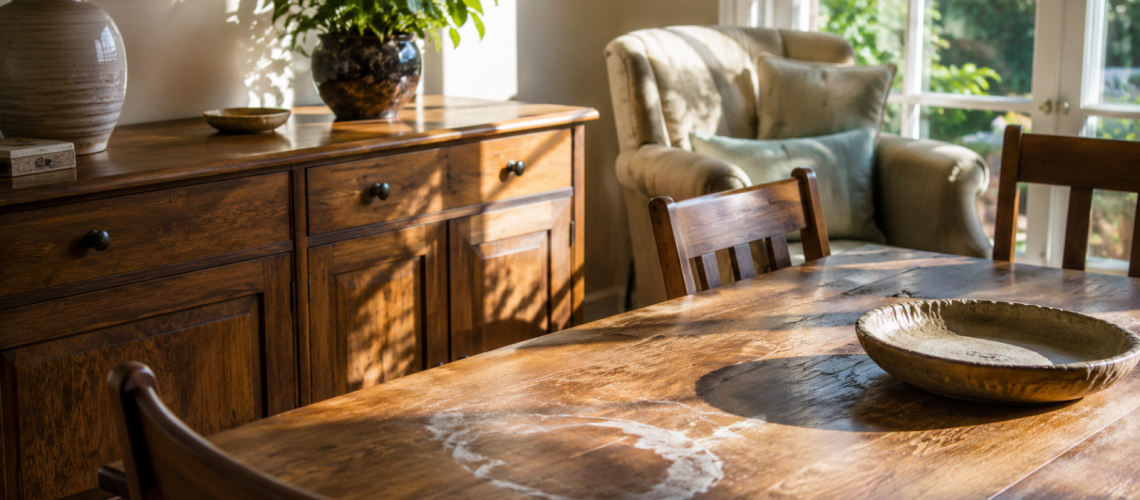
Summer weather can be enjoyable, but prolonged heat, strong sunlight and changing humidity levels can quietly damage furniture and household contents. Unlike fire or flood damage, the effects are not always immediately obvious. Problems may develop gradually, becoming noticeable only once finishes have faded, joints have loosened or upholstery has started to deteriorate.
Understanding the risks can help you protect valuable furniture before the damage becomes more serious. It can also make it easier to recognise when professional restoration may be needed.
How Heat Affects Wooden Furniture
Wood naturally reacts to changes in temperature and moisture. During hot, dry weather, it can lose moisture and contract. When humidity later rises, the wood may absorb moisture and expand again.
Repeated movement can place pressure on joints, veneers and finishes. Over time, you may notice:
- Small cracks forming along panels or joints
- Drawers and doors becoming difficult to open
- Veneer beginning to lift or separate
- Gaps appearing between joined sections
- Polished surfaces becoming dull or uneven
Antique furniture can be especially vulnerable because traditional materials and adhesives may respond differently to modern central heating, direct sunlight and sudden temperature changes.
Sunlight Can Cause Fading and Discolouration
Furniture positioned near windows may receive several hours of direct sunlight each day. Ultraviolet light can gradually alter the colour of wood, fabrics, leather and decorative finishes.
Some timbers become lighter, while others may darken unevenly. Upholstery can fade where it is exposed, leaving a noticeable contrast beneath cushions or decorative objects.
The damage is often gradual, so it may not be obvious until the furniture is moved or compared with an area that has remained shaded.
Curtains, blinds and UV-filtering window treatments can help reduce exposure. Rotating furniture or decorative items may also help prevent one area from receiving all the sunlight.
Heat Can Weaken Furniture Finishes
Traditional polished surfaces can be affected by prolonged heat, especially when furniture is positioned close to windows, radiators or conservatory glass.
High temperatures may soften waxes and finishes, making surfaces more vulnerable to marks, scratches and fingerprints. Heat can also cause polished surfaces to appear cloudy, dry or uneven.
Placing hot objects directly onto furniture may create white marks, blistering or permanent damage to the finish. Mats, coasters and heat-resistant table protectors should always be used, even when serving dishes are placed over tablecloths.
Humidity Can Damage Upholstery and Contents
Summer heat is often accompanied by periods of high humidity. Upholstery, books, artwork, leather and textiles can absorb moisture from the surrounding air.
In poorly ventilated rooms, this may contribute to:
- Musty odours
- Mould or mildew
- Staining on fabrics
- Leather becoming stiff or discoloured
- Paper and books beginning to curl
- Adhesives weakening within furniture
Air circulation is particularly important in storage rooms, basements and properties that remain closed while owners are away.
Conservatories and Sunrooms Present a Greater Risk
Conservatories can become extremely hot during the summer, often reaching temperatures much higher than the rest of the home. Furniture kept in these areas may experience rapid heating during the day followed by cooler temperatures at night.
These fluctuations can accelerate fading, drying and movement within wood. Antique, veneered or highly polished furniture should ideally be positioned away from direct sunlight and excessive heat.
Signs That Furniture May Need Professional Attention
Early signs of heat-related damage should not be ignored. Minor issues are often easier to repair before they become structural problems.
You may need professional advice if you notice:
- Lifting veneer or decorative inlay
- Cracks in polished wooden surfaces
- Loose joints or unstable legs
- Severe fading or uneven colour
- Cloudy or blistered finishes
- Mould, odours or staining on upholstery
Attempting to sand, glue or refinish valuable furniture without understanding the materials involved can cause further damage and may reduce its value.
Protecting Furniture During Hot Weather
A few simple precautions can reduce the risk of summer damage:
- Keep furniture away from direct sunlight where possible
- Use blinds or curtains during the brightest part of the day
- Maintain steady ventilation throughout the property
- Avoid positioning furniture directly beside heat sources
- Use coasters, mats and heat-resistant table coverings
- Check stored furniture regularly for mould or movement
- Avoid applying excessive polish during very hot conditions
Professional Furniture Restoration from The Abbey Group
Summer heat does not always cause dramatic damage, but its gradual effects can still affect the appearance, stability and value of furniture.
At The Abbey Group, we restore antique, modern and sentimental furniture affected by heat, sunlight, humidity and other forms of damage. Our experienced craftsmen carefully assess each item before recommending the most appropriate cleaning, repair or refinishing process.
If you have noticed cracks, faded finishes, lifting veneer or damage to upholstered furniture, contact The Abbey Group on 01708 741135 or email info@abbey-group.net to discuss professional restoration.