

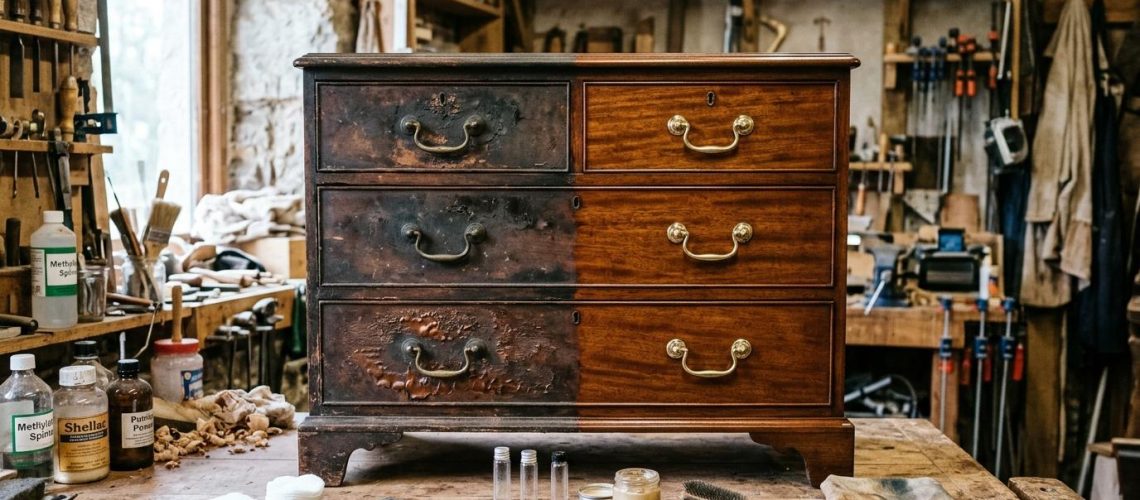
Fire can be devastating for antiques. Even where flames never reach a piece, intense heat, smoke and soot can damage finishes, veneers and fittings within hours, and the water used to put out a fire often causes further harm. Our antique fire damage restoration service is designed to assess, stabilise and restore fire-damaged antiques while protecting their historic and financial value.
We specialise in insurance-led restoration, working with insurers, loss adjusters and private clients across the UK from our workshops in Romford, Essex.
How Fire Damages Antiques
Fire rarely causes just one type of damage. Antiques are often affected by several at once:
- Heat – traditional finishes such as French polish and wax can blister, craze or soften. Old animal glues weaken, so veneers and joints may lift or loosen, and timber can shrink, split or warp.
- Smoke and soot – residues can be acidic and oily. They discolour wood and fabrics, settle into carving and open grain, tarnish brass and other metal fittings, and leave a persistent smell.
- Water – firefighting water can leave white marks, staining, swelling and lifting veneer, adding to the damage caused by the fire itself.
Our guide on why soot damage gets worse the longer it is left explains why early treatment matters so much.
Our Antique Fire Damage Restoration Process
Every antique is assessed individually, but our work generally includes:
- Assessment and reporting – we inspect each piece, record its condition and provide a written conservation report and quotation
- Stabilisation and storage – affected items can be moved to our workshops, where storage facilities are available while work is carried out
- Soot and smoke removal – residues are removed using controlled methods suited to each material, to avoid pushing soot further into the surface
- Odour treatment – the source of smoke odours is treated rather than masked
- Structural repairs – loose joints, lifting veneer, damaged mouldings and fittings are repaired using traditional techniques
- Refinishing – surfaces are colour matched and refinished, often using traditional French polishing, to suit the age and character of the piece
Where upholstered antiques have been affected, we can also clean, repair or re-upholster them.
Preserving Value and Patina
With antiques, the aim is not to make a piece look new. Original timber, finish and patina all contribute to an antique’s character and value, so we retain as much original material as possible and only replace what cannot be saved. Our article does restoring an antique lower the value? explains why careful, sympathetic restoration matters.
A Recent Example: Fire-Damaged Wellington Chest
We recently restored a family Wellington chest that had been badly affected by fire, smoke, soot and firefighting water. After soot and odour treatment, the chest was dismantled to deal with water damage inside, dried and stabilised, then carefully refinished with a traditional French polish. You can read more about restoring the Wellington chest after fire and smoke damage.
Insurance Claims for Fire-Damaged Antiques
Fire damage to antiques often forms part of a home or business insurance claim. We provide written reports, quotations and valuations of damaged items before and after the proposed work, helping insurers and loss adjusters decide whether restoration is the right option.
Restoring an antique is often preferable to replacing it, particularly where a piece is rare or has sentimental value. Read why insurance companies often choose restoration over replacement after a fire, or find out more about our insurance claim contents restoration service.
What to Do With Fire-Damaged Antiques
- Only enter the property when it has been confirmed as safe
- Photograph damaged antiques before moving or throwing anything away
- Avoid wiping soot or using household cleaning products
- Keep loose veneer, mouldings, handles and other fittings together
- Move wet items away from standing water and let them dry slowly, away from direct heat
- Contact your insurer and a specialist restorer as soon as possible
Frequently Asked Questions
Can antiques be restored after fire damage?
In many cases, yes. Pieces that look badly affected by smoke and soot often have a sound structure underneath and can be cleaned, repaired and refinished. Each item needs to be assessed individually.
How quickly should fire-damaged antiques be treated?
As soon as possible. Soot and smoke residues continue to affect surfaces after a fire, and damage generally becomes harder to reverse the longer it is left.
Do you work with insurance companies?
Yes. Much of our fire and flood restoration work is carried out for insurance claims, and we provide the reports, quotations and valuations insurers need.
Do you restore fire-damaged antiques outside Essex?
Yes. Our workshops are in Romford, Essex, and we restore fire-damaged antiques and furniture for clients and insurers across the UK.
Specialist Antique Fire Damage Restoration
Our fire and flood furniture restoration service also covers modern furniture and household contents, and we provide antique flood damage restoration for water-damaged antiques.
If your antiques have been damaged by fire, smoke or soot, contact The Abbey Group on 01708 741135 or email info@abbey-group.net for specialist advice.