

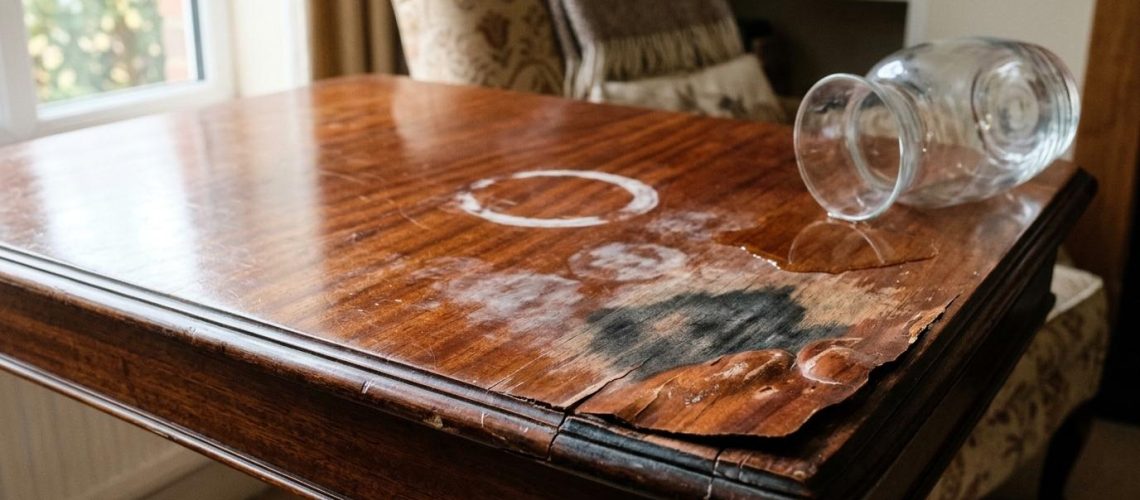
When water reaches wooden furniture, the damage does not always look the same. A spilled vase might leave a pale ring on a table top, while a leak or flood can leave dark staining, lifting veneer and drawers that suddenly refuse to close.
Each of these signs tells a restorer something different about how far the water has travelled and what it will take to put right. Understanding them can help you decide what to do next and avoid making the damage worse while the furniture dries.
At The Abbey Group, we restore water-damaged furniture of all kinds, from everyday pieces to valuable antiques. Here is what the most common types of water damage mean.
White Marks and Cloudy Patches
White rings, hazy patches or a milky look across a polished surface are usually caused by moisture becoming trapped in or just beneath the finish, rather than in the wood itself.
They are common on furniture finished with French polish (shellac) or wax, which are more sensitive to water and heat than many modern lacquers.
Because the damage is often confined to the finish, white marks are frequently among the more treatable forms of water damage. Depending on how deep they go, a restorer may be able to draw out the moisture or revive the existing finish. Where the polish has broken down, the surface may need cutting back and re-polishing. Our French polishing service is often used for exactly this kind of repair.
Dark or Black Stains
Dark grey or black marks are usually a sign that water has passed through the finish and into the wood.
In timbers rich in natural tannins, such as oak, water can react with those tannins, particularly where iron is present from nails, fittings or metal objects left on the surface. Prolonged dampness can also allow mould to develop, which may show as dark spotting.
These stains sit within the timber rather than on top of it, so they are harder to remove than white marks. Treatment may involve carefully removing the finish, using specialist stain treatments and then colour matching and re-finishing the surface. On antiques, the aim is to reduce the staining while keeping as much of the original surface and patina as possible.
Lifting, Bubbling or Loose Veneer
Much older furniture is veneered, with a thin decorative layer of wood glued to a solid base. Traditional animal glues soften when they become wet, so water damage can cause veneer to bubble, lift at the edges or come away completely.
If any pieces of veneer have come loose, keep them, even if they are small. Original veneer can often be cleaned, flattened and re-laid, which is far better for the appearance and value of the piece than replacing it.
Lifting veneer should not be pressed back down or glued at home while the furniture is still damp, as moisture trapped underneath can cause further problems later.
Swelling, Sticking Drawers and Loose Joints
Wood absorbs moisture and swells. After water damage, drawers and doors may stick, panels may bow and joints may feel tight at first.
As the furniture dries, the opposite can happen. Timber shrinks back, sometimes unevenly, which can lead to splits, warping and loose joints. This is one reason controlled drying matters so much.
Furniture made from chipboard or MDF behaves differently. These materials tend to swell and crumble when wet and often cannot be restored in the same way as solid wood.
What to Do While Your Furniture Dries
The steps you take in the first few days can make a real difference to the final result:
- Wipe away standing water and move furniture away from wet floors and walls
- Remove drawers and open doors so air can circulate
- Let the furniture dry slowly at normal room temperature with good ventilation
- Avoid radiators, heaters and hairdryers, as rapid drying can cause splitting and warping
- Do not sand, scrub or use abrasive polishes on marks
- Keep any loose veneer, mouldings or fittings safely together
- Photograph the damage before anything is moved or thrown away if you may need to make an insurance claim
Our guide to caring for your furniture after a flood has more advice on sorting and drying affected items.
When to Call a Restoration Specialist
A single small white mark on a modern table may be a minor problem. However, it is worth seeking professional advice when:
- The furniture is antique, valuable or of sentimental importance
- Stains are dark or have spread into the wood
- Veneer is lifting or pieces have come away
- Joints, drawers or doors have been affected
- The damage forms part of a home insurance claim
Well-meant home remedies can sometimes make water damage harder to reverse, particularly on traditional finishes. An experienced restorer will assess the finish, the timber and the construction before deciding on the right treatment.
Find out more about our water damaged furniture restoration service, including how we assess, dry, repair and re-finish affected pieces.
Expert Help With Water-Damaged Furniture
At The Abbey Group, we restore furniture affected by spills, leaks and flooding, working on everything from treasured family pieces to valuable antiques. We also work with insurers on contents restoration claims.
If your furniture has been affected by water damage, contact The Abbey Group on 01708 741135 or email info@abbey-group.net for professional advice.